Amir Schmidt · 11 November 2026
Ceramic Markings Unearth Nortia's Overlooked Connections to Agriculture in Ancient Central Italy
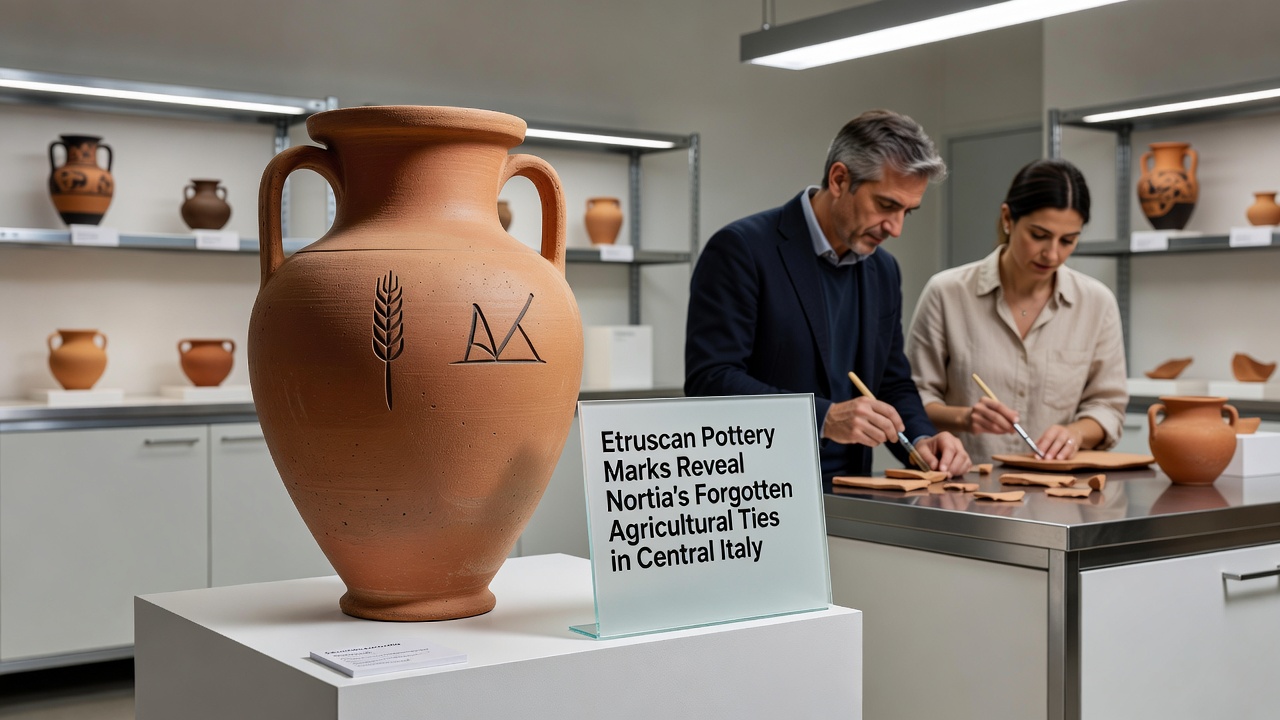
Archaeologists working across central Italy have identified distinctive marks on Etruscan pottery that connect the goddess Nortia to farming practices in the region, and these findings shift attention from her better-known associations with fate toward seasonal agricultural cycles. Excavations in areas such as the Tiber Valley and southern Tuscany continue to produce vessels bearing incised symbols that researchers now interpret as references to crop management, harvest timing, and soil fertility rituals.
Patterns Emerging from Recent Finds
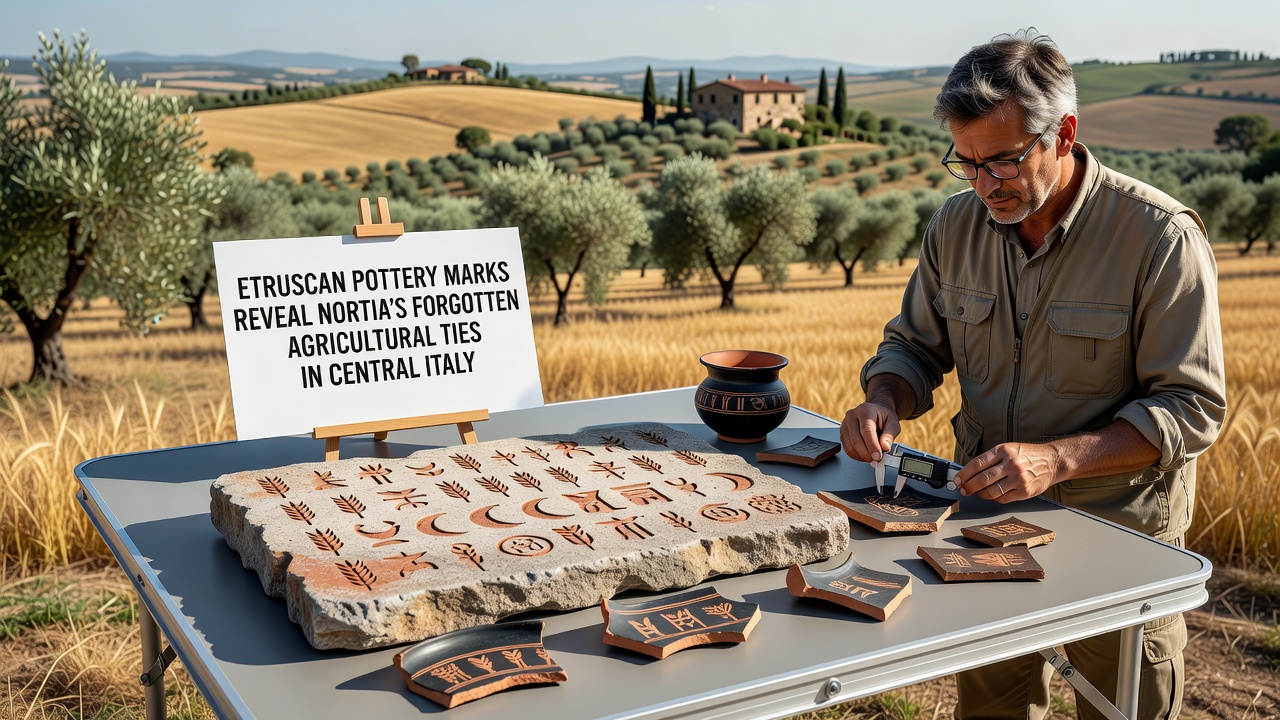
Teams at multiple sites have documented pottery shards featuring repeated motifs including stylized nails, grain stalks, and seasonal calendars, and these elements appear together on storage jars and offering bowls dated between the seventh and fourth centuries BCE. The combination suggests Nortia held influence over planting schedules and yield protection in communities that relied on olive groves and cereal fields, while similar symbols show up less frequently on ritual objects from urban centers. Data from stratigraphic layers indicate these marked vessels cluster near former agricultural terraces, which points to deliberate placement rather than random distribution.
One study coordinated by the Italian Ministry of Culture examined over two hundred fragments from controlled digs, and the results revealed consistent use of a particular nail-like incision paired with wheat-like lines on containers used for grain storage. Such pairings occur at higher rates in rural contexts than in sanctuary assemblages, which has prompted analysts to reconsider how Nortia imagery adapted to local economic needs.
Interpreting the Symbols in Context
Scholars compare the marks to known Etruscan scripts and iconographic traditions, and they note that the nail element often linked to Nortia in literary sources now aligns with agricultural timekeeping devices such as tally sticks used for field rotations. Pottery recovered from farmstead foundations near modern Orvieto carries additional markings that resemble boundary stones or irrigation channels, and these appear alongside standard dedicatory formulas. Researchers therefore propose that rural populations invoked Nortia for both fate and practical crop oversight, whereas urban elites emphasized her prophetic aspects.
Field Evidence from Central Italian Valleys
Surveys conducted along the Chiana and Tiber river systems have located clusters of marked ceramics in association with terraced fields and olive presses, and carbon dating of associated organic remains places the material firmly within peak Etruscan agricultural expansion periods. In several cases the vessels show wear patterns consistent with repeated filling and emptying, which supports their identification as practical storage items rather than purely votive objects. Observers note that the distribution pattern matches known trade routes for agricultural surplus, suggesting the marks served both practical and symbolic functions during transport and exchange.
Additional context comes from a collaborative report issued by the University of Sydney's archaeology department, which analyzed soil samples taken directly beneath marked pottery deposits and found elevated levels of ancient pollen from emmer wheat and barley. These botanical traces reinforce the link between the vessels and cultivation activities, and the report further documents that similar pollen signatures appear at sites where Nortia dedications coincide with harvest festivals described in later Roman texts.
Connections to Broader Etruscan Practices
Comparative analysis with neighboring regions shows that pottery marks tied to Nortia differ from those associated with other deities such as Selvans or Tinia, and the distinctions center on agricultural specificity rather than general prosperity themes. Inscriptions referencing nail-driving ceremonies, traditionally viewed as fate-related, now appear in contexts that also contain threshing floors and granary foundations. This overlap suggests the rituals may have synchronized community labor with planting and reaping calendars, while the same symbols on urban pottery remain rarer and more abstract.
Examinations of kiln sites near agricultural estates reveal that potters produced marked vessels in batches sized for farm storage, and residue analysis confirms traces of olive oil and grain on many examples. These technical details provide material support for the interpretation that Nortia's agricultural role operated alongside her established functions, and the evidence spans both elite and commoner contexts across central Italy.
Upcoming Research Milestones
Plans for a major symposium scheduled for November 2026 at the National Etruscan Museum in Rome will bring together specialists to present new readings of the pottery corpus, and organizers expect additional data from ongoing surveys in the Val d'Orcia to be released at that time. Preliminary abstracts indicate that participants will discuss refined typologies for the marks and their correlation with paleoclimate records that track ancient rainfall patterns affecting harvests.
Conclusion
The accumulating evidence from ceramic marks demonstrates that Nortia's presence in central Italian material culture extended into agricultural domains previously underemphasized in scholarship, and continued fieldwork promises to clarify how communities integrated her worship with the practical demands of farming life. As more sites undergo systematic study, the patterns visible on these vessels offer a clearer view of Etruscan rural economies and the deities that guided them.