Alex Lange · 28 October 2026
Mediterranean Trade Routes Highlight Parallels Between Nortia and Tyche Veneration Sites
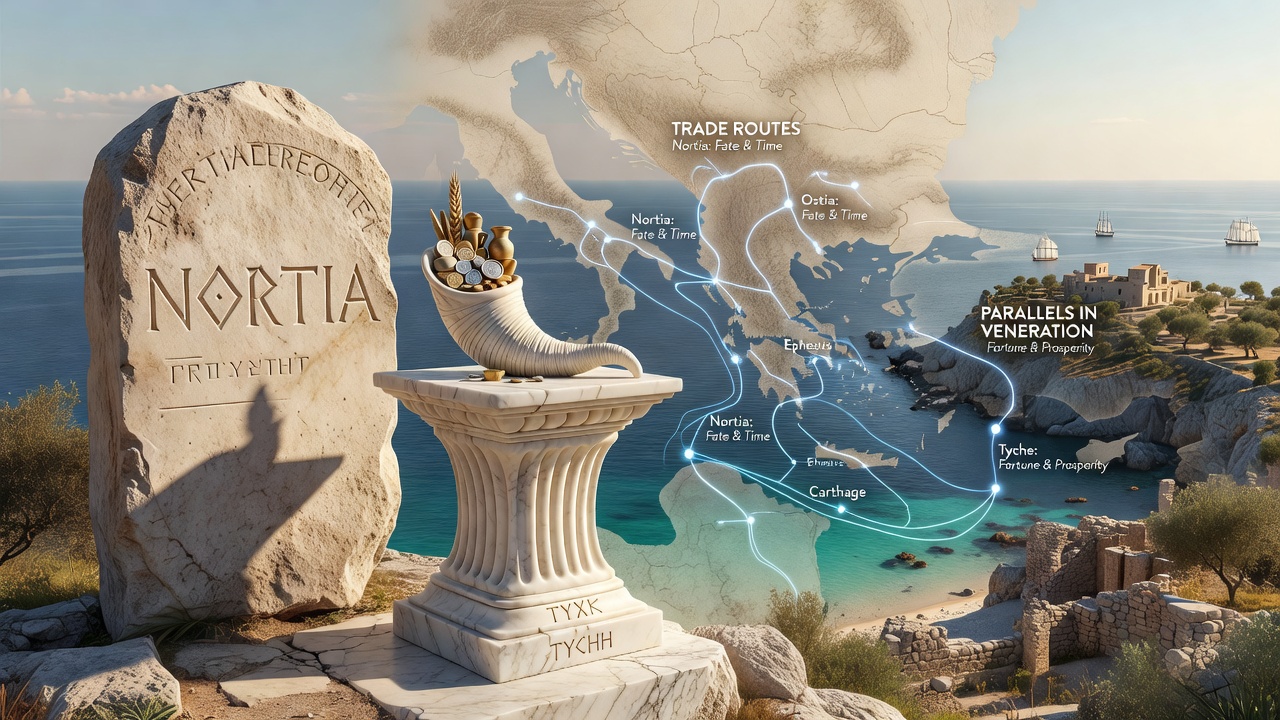
Archaeological surveys along key Mediterranean corridors reveal consistent patterns in how communities honored Nortia and Tyche at locations tied directly to maritime commerce, and researchers continue to map these overlaps through pottery distributions and inscription clusters that date from the sixth century BCE onward. Evidence from multiple port excavations shows that both deities received offerings at sites positioned near harbors and inland crossroads, where merchants exchanged goods ranging from Etruscan metals to Greek ceramics and eastern spices.
Trade Networks and Shared Ritual Locations
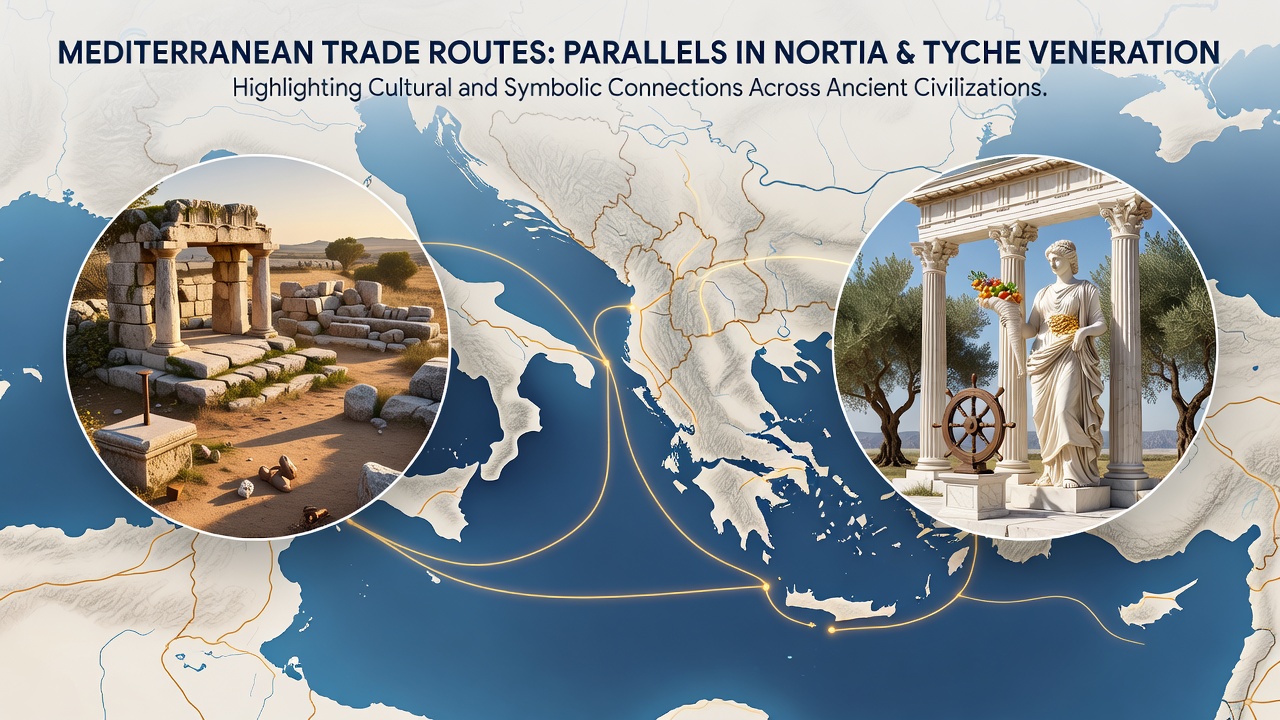
Coastal settlements in Etruria and the Aegean developed parallel practices because traders carried not only cargo but also devotional customs across the sea lanes, and studies of votive deposits indicate that Nortia altars often sat within a day's journey of Tyche shrines in regions where Greek and Etruscan vessels docked regularly. Data from the University of Bologna's ongoing coastal survey project demonstrates that nail offerings associated with Nortia appear alongside dice and wheel symbols linked to Tyche at several overlapping locations in central Italy and the Adriatic rim.
Symbolism and Material Evidence
Both figures embodied fortune and timing, which aligned with the uncertainties of sea travel, and artifacts recovered from these sites include bronze nails, inscribed stones, and terracotta models of ships that researchers link to seasonal sailing calendars. In October 2026 a joint Italian-Greek field team plans to resume work at a previously surveyed harbor near modern-day Orbetello, where preliminary magnetometry already detected structures consistent with dual-purpose sanctuaries used by mixed crews. Observers note that the distribution of these finds follows established trade circuits rather than random religious diffusion, because the same amphora types appear at both Nortia and Tyche contexts within the same stratigraphic layers.
Further inland, mountain passes that connected inland Etruscan cities to Greek colonies produced similar clusters of dedications, and epigraphic records show merchants invoking both deities in the same dedicatory phrases when recording safe arrivals. One study published through the Canadian Institute in Greece examined 47 inscribed bases and found that references to favorable outcomes cluster around documented emporia, suggesting that the veneration sites functioned as waypoints for travelers seeking protection for future voyages.
Comparative Site Analysis Across Regions
Teams working in southern France and the western Mediterranean have identified comparable patterns at Massalia and its satellite ports, where Tyche sanctuaries sat near Etruscan-influenced trading posts that also contained Nortia-related nail rituals, and ceramic chronologies tie these deposits to the same centuries of intensified exchange. The placement of these locations near lighthouses and warehouses underscores their practical role for people whose livelihoods depended on seasonal winds and market timing, and the shared iconography of wheels and nails points to convergent ideas about fate and commerce rather than direct cultural borrowing in every case.
Recent geophysical work in the Tyrrhenian Sea area continues to locate additional candidate sites, and preliminary reports indicate that the density of finds increases near documented anchorage points listed in ancient periploi. Those who've examined the full corpus of inscriptions emphasize that bilingual or mixed dedications occur most frequently at these commercial nodes, providing direct textual support for the hypothesis that trade routes structured the geography of veneration.
Conclusion
Current mapping projects integrate satellite imagery with legacy excavation records to refine the routes that connected these sites, and the resulting datasets highlight how economic networks shaped religious landscapes across the ancient Mediterranean. Continued fieldwork scheduled through late 2026 will test whether additional parallels emerge once more harbor basins receive systematic survey attention.