Harper Albrecht · 2 September 2026
Recent scholarly research has established potential connections between the rituals dedicated to Nortia, the Etruscan goddess of fate, and the foundational reforms of the Roman calendar. These findings highlight the profound Etruscan influence on Roman religious and temporal practices during the early Republic.
The Significance of Nortia
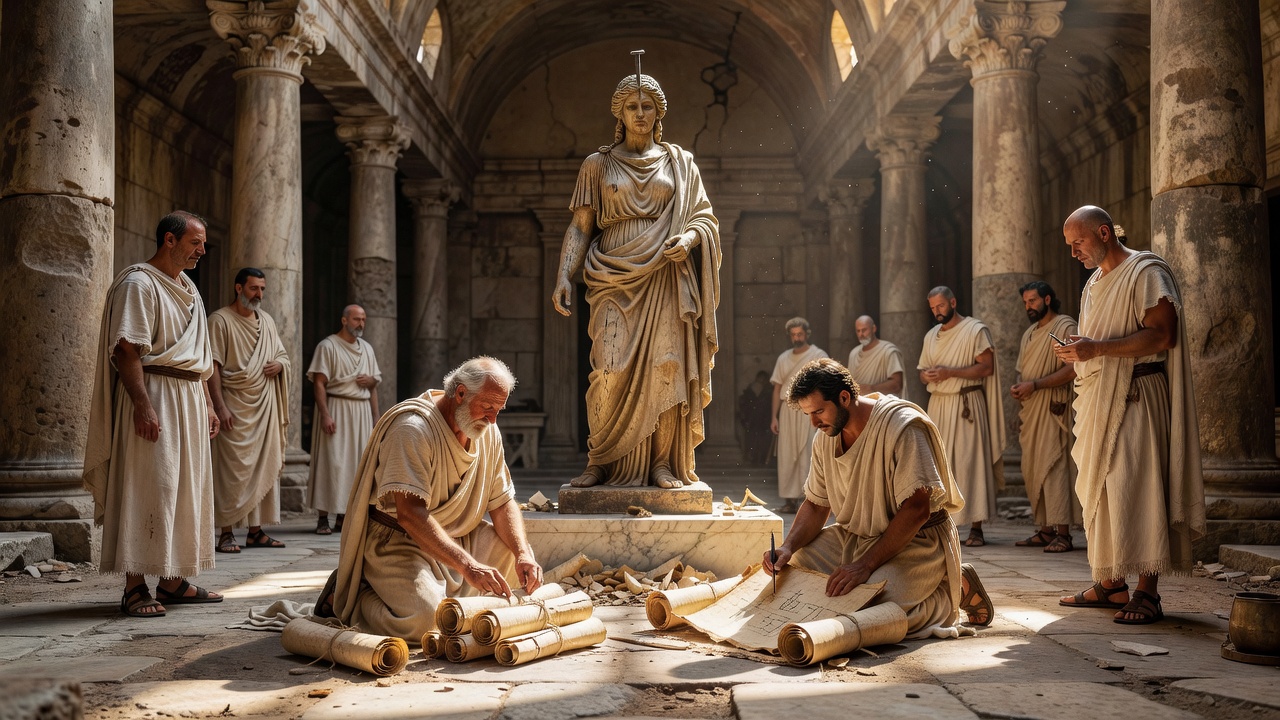
Nortia was revered in Etruscan culture for her association with destiny and the passage of time. Her primary sanctuary in Volsinii featured an annual ceremony where a nail was driven into the temple wall. This act symbolized the fixation of fate for the coming year and served as a chronological marker. Historians note that this practice may have provided a model for timekeeping mechanisms in pre-Roman Italy. Evidence from archaeological excavations indicates that such rituals were integral to Etruscan societal organization, helping communities track agricultural cycles and religious festivals. The goddess's domain extended beyond mere fortune to encompass the structured progression of seasons and years.
Implications for Roman Calendar Development
Scholars argue that early Roman kings, particularly Numa Pompilius, incorporated Etruscan elements when reforming the lunar calendar. The introduction of intercalary months and the alignment with solar events could reflect adaptations of Nortia's nail-driving tradition. Roman records mention similar nail ceremonies in the temple of Jupiter, suggesting a direct cultural transmission. Further analysis of ancient texts reveals parallels between Etruscan fate rituals and Roman efforts to standardize time measurement. This linkage underscores the Etruscans' role in shaping Roman institutions. Ongoing research continues to explore these historical intersections through comparative studies of artifacts and inscriptions. These discoveries enrich our understanding of how religious practices from neighboring cultures influenced the evolution of Roman society, particularly in areas as fundamental as the measurement of time.