Amir Schmidt · 16 September 2026
Roadside Nortia Shrines Illuminate Etruscan Travel Customs
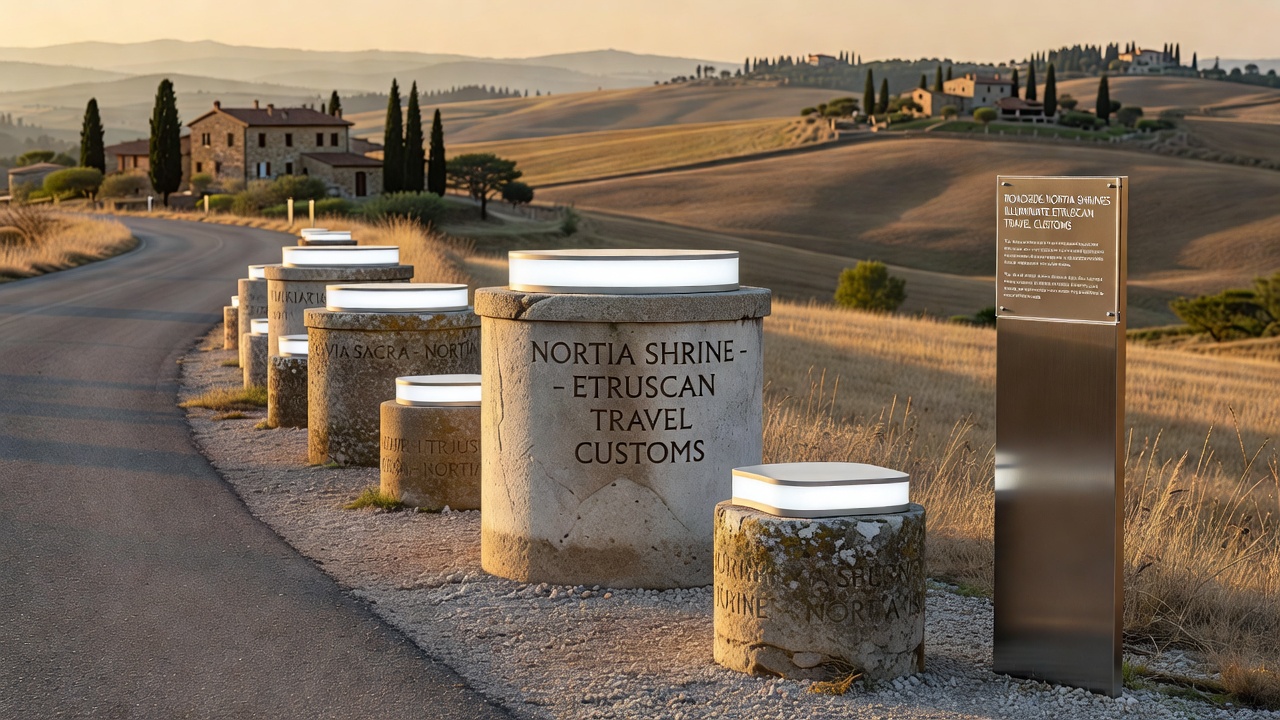
Archaeological evidence from central Italy shows that roadside shrines dedicated to Nortia marked key travel routes during the Etruscan period from the seventh to the fourth centuries BCE, and these structures provide direct information about movement patterns between city-states such as Tarquinia, Veii, and Vulci. Nortia, recognized as the deity associated with fate and timing, received offerings at these locations where travelers paused before continuing journeys across the landscape.
Distribution of Nortia Shrines Along Major Routes
Surveys conducted by Italian heritage authorities have mapped over two dozen shrine sites positioned at intervals of approximately five to eight kilometers along ancient roads that connected coastal ports with inland settlements. These positions align with natural rest points near streams or ridge crossings where carts and pack animals required maintenance. Inscriptions recovered at several sites list dedications by merchants and envoys, indicating that the shrines functioned as waypoints rather than isolated cult centers.
Excavations near the Via Clodia corridor, for example, uncovered stone bases with nail holes consistent with the practice of driving nails into wood or stone as recorded in later Roman sources referencing Nortia. Each nail marked a completed stage of travel, and the cumulative pattern allowed observers to track elapsed time and distance without written logs.
Material Evidence and Offerings
Pottery fragments and bronze votives recovered from shrine contexts include miniature wheels, model yokes, and small vessels for oil or wine. These items appear consistently at roadside locations but occur less frequently at urban sanctuaries dedicated to the same deity. The difference suggests travelers selected portable offerings suited to brief stops rather than elaborate rituals performed in city temples.
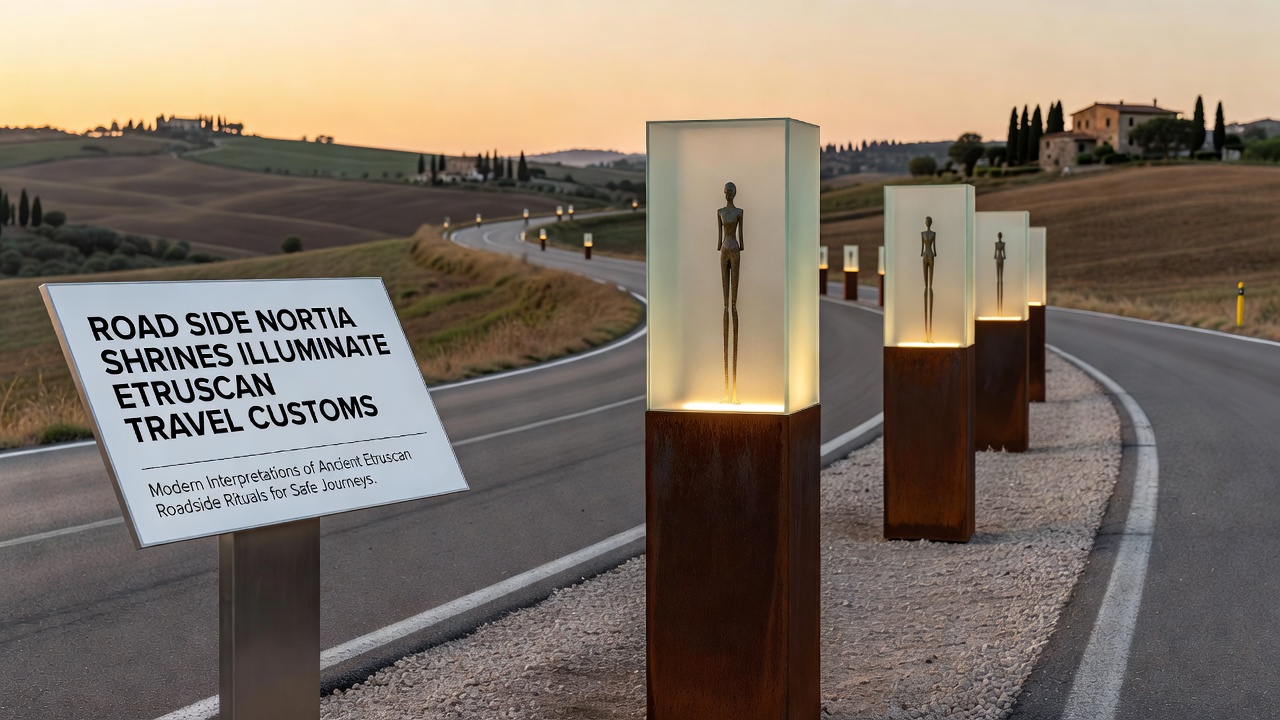
Soil samples from one shrine near modern Orvieto contained traces of olive oil and resin, substances that could be carried in small quantities and used for both practical lubrication of axles and ritual anointing. Researchers from teh University of Bologna have documented similar residue profiles at additional sites, supporting the interpretation that the same supplies served dual purposes during journeys.
Travel Infrastructure and Safety Considerations
Etruscan road engineering included drainage channels and gravel surfaces that reduced mud accumulation during rainy seasons. Shrine locations often coincide with these engineered stretches, suggesting planners placed cult installations where travelers could reliably stop without risk of becoming stuck. Inscriptions on boundary stones near two shrines record local magistrates who maintained both the road surface and the adjacent shrine, showing integrated civic responsibility for infrastructure and cult observance.
Travel between Etruscan centers required crossing territories controlled by different ruling families. The presence of standardized shrine architecture at intervals implies a shared expectation that these neutral sites would remain accessible regardless of shifting political alliances. This arrangement parallels later Roman practices of maintaining wayside shrines along the Via Appia and other long-distance routes.
Connections to Broader Etruscan Mobility Patterns
Isotopic analysis of animal bones found at shrine sites indicates that some travelers used mules or donkeys raised in the Apennine foothills before descending toward the Tyrrhenian coast. Such evidence aligns with trade records preserved in Greek sources that describe Etruscan export of iron and copper. The shrines therefore mark not only physical travel but also the economic networks that sustained it.
Upcoming presentations scheduled for September 2026 at the Florence archaeological conference will include fresh data from lidar mapping of additional road segments, which may reveal previously undocumented shrine locations and clarify how the network extended into the Po Valley.
Conclusion
Collective findings from excavation, epigraphy, and residue analysis demonstrate that roadside Nortia shrines formed an integral component of Etruscan travel infrastructure. The placement, offerings, and maintenance of these sites supply concrete evidence of how people moved goods and information across the region while observing ritual obligations tied to fate and timing. Continued fieldwork continues to refine the map of these locations and the routes they once served.