Alex Lange · 2 September 2026
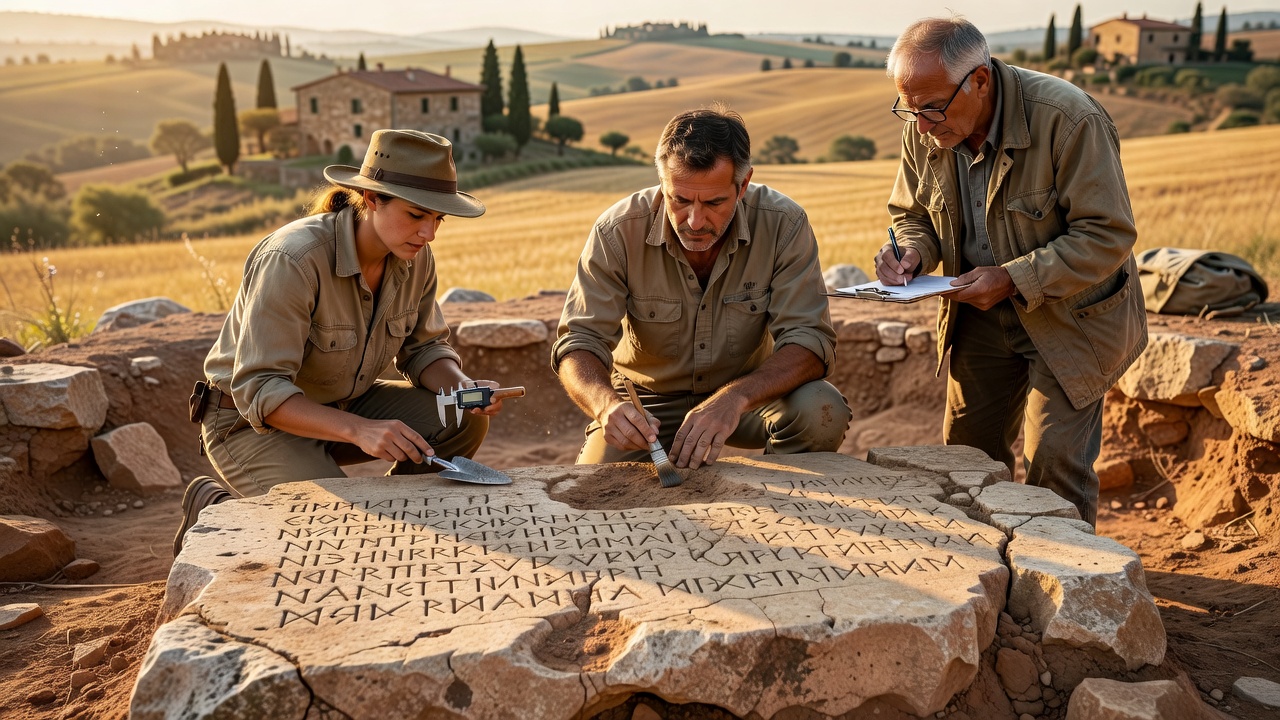
Archaeologists in Tuscany have unearthed an altar dedicated to Nortia, the Etruscan goddess of fate. The discovery occurred during a routine survey near Volterra and includes limestone fragments bearing Etruscan script. Initial analysis dates the structure to the fourth century BCE, offering direct evidence of rituals tied to destiny and timekeeping.
Excavation Details and Inscriptions
The altar measures two meters long and shows signs of repeated use, with grooves consistent with nail-driving ceremonies linked to Nortia. Five lines of text reference offerings and annual markings of fate. Led by Dr. Elena Rossi, the team employed multispectral imaging to reveal faded characters. Pottery and bronze items nearby indicate a sanctuary setting. Carbon dating aligns with known Etruscan activity in the region.
Further fragments suggest the site formed part of a larger complex used for seasonal rites. Scholars note the inscriptions' rarity, as few surviving texts mention Nortia explicitly. Comparison with other Etruscan finds may clarify linguistic variations from the period.
Broader Significance
Nortia, associated with fortune and inevitability, appears in limited Roman accounts but remains enigmatic in Etruscan contexts. This altar provides material proof of her worship practices. Researchers intend to translate the full text using updated epigraphic tools and expand digs next season.
Authorities have secured the site for preservation while planning public displays. The find enriches understanding of Etruscan religion and highlights Tuscany's archaeological potential for future studies on ancient belief systems.