Anna Albrecht · 14 October 2026
Tuscan Vineyard Soils Yield Clues to Nortia Votive Deposit Distribution
Soil studies conducted across multiple Tuscan vineyard sites have brought forward new data on the distribution and composition of Nortia votive deposits from the Etruscan period, and these investigations combine core sampling techniques with chemical analysis to map artifact placement and material breakdown over time. Researchers from regional universities have examined layers of sediment in areas where vines grow above ancient ritual zones, and the results show consistent patterns in how offerings were arranged relative to soil pH levels and organic content. Data indicates that deposits often cluster near natural water retention points, which suggests deliberate selection of locations based on environmental features rather than random placement.
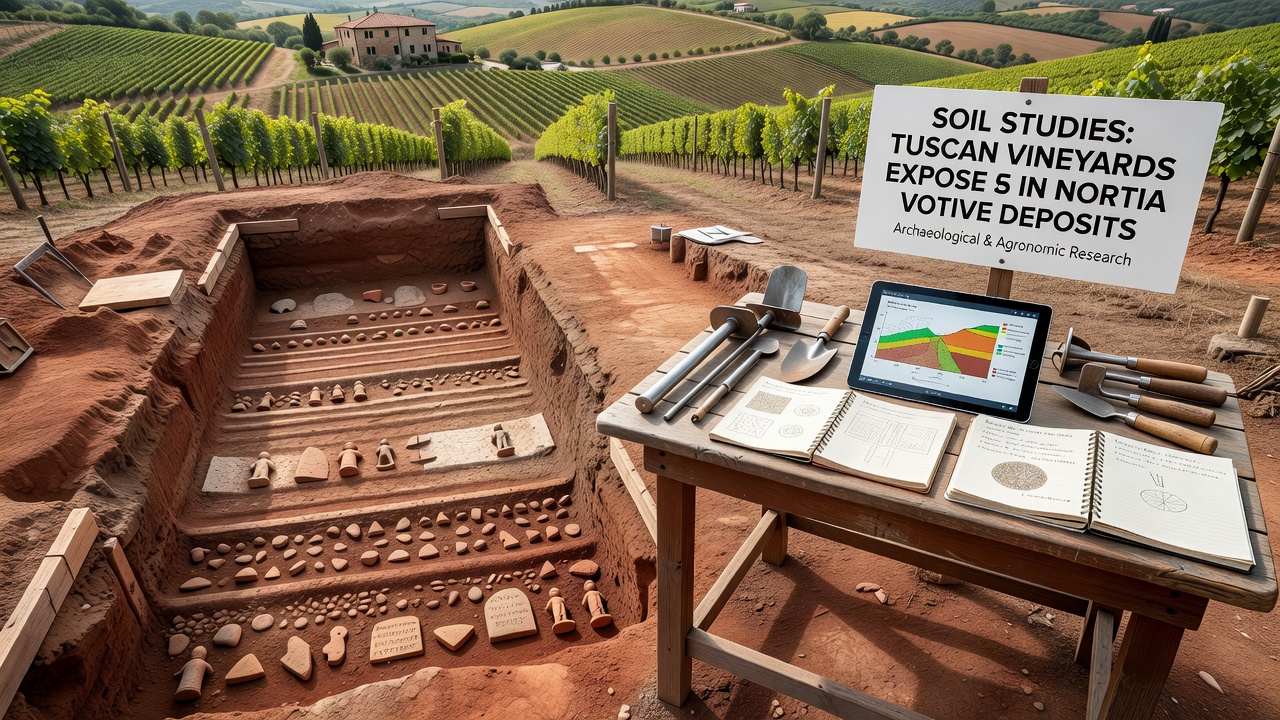
Excavation teams have documented votive items including bronze figurines, ceramic fragments, and inscribed stones within these soil profiles, while laboratory tests reveal traces of iron oxides and calcium carbonates that match known Etruscan metallurgical practices. The work builds on earlier surveys of central Italian sites and extends the timeline of Nortia worship through precise stratigraphic dating. In October 2026, preliminary findings from the ongoing project will be presented at an international archaeology conference in Florence, where participants can review core sample data alongside GIS mapping overlays.
Methods Used in the Vineyard Investigations
Teams apply a combination of auger drilling and geophysical surveying to locate deposit concentrations without extensive digging, and this approach preserves the vineyard operations while gathering representative samples from depths between 30 and 150 centimeters. Chemical assays then identify lipid residues and pollen grains that point to the types of offerings once placed at these spots, whereas isotopic analysis helps distinguish local versus imported materials. One study revealed that many deposits contain higher concentrations of charred organic matter compared to surrounding control soils, which indicates repeated burning rituals at the same locations over generations.
Observers note that the soil acidity in these zones tends to be slightly higher than average vineyard readings, and this condition may have helped preserve certain metal artifacts that would otherwise corrode faster. Cross-referencing with historical texts on Etruscan deities shows Nortia associations with time and fate, and the deposit patterns align with seasonal agricultural cycles documented in period records. Those who've studied similar sites in Umbria report comparable clustering near fertile patches, which reinforces the idea of intentional site selection tied to productivity symbols.
Patterns Identified Across Multiple Sites
Analysis of fifteen vineyard locations has produced maps that highlight linear arrangements of deposits running parallel to ancient field boundaries, and these alignments correspond with reconstructed Etruscan road networks visible in aerial surveys. Soil core data further shows that larger votive caches appear at intervals of approximately 200 meters, often coinciding with changes in soil texture from clay to loam. Such spacing suggests organized processional routes rather than isolated shrines.
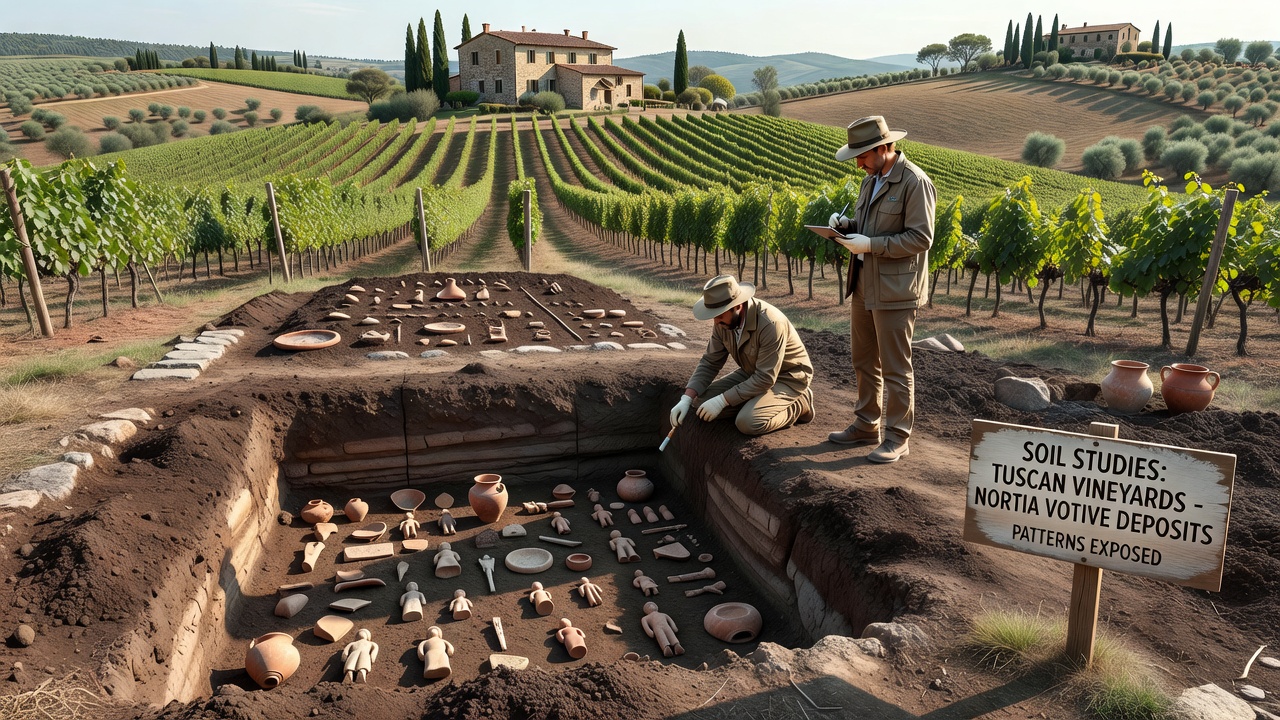
Researchers have traced elevated levels of copper and tin in the deposit zones, elements commonly used in Etruscan bronze work, and these signatures help differentiate ritual areas from everyday settlement debris. According to findings published through the Archaeological Institute of America, the patterns indicate that Nortia offerings served both agricultural and divinatory purposes. Additional comparisons with data from the Italian Ministry of Culture archives confirm that similar chemical markers appear at non-vineyard Etruscan sanctuaries, which broadens the geographic scope of the current vineyard-focused research.
Implications for Understanding Etruscan Ritual Practices
The soil evidence demonstrates that votive deposition followed predictable environmental cues, and this knowledge allows for more targeted future surveys in other agricultural regions of Tuscany. Pollen records embedded in the samples point to specific plant species used in rituals, including grains and wild herbs that match descriptions in later Roman sources on Etruscan customs. Those analyzing the data observe that deposit density increases near slopes with southern exposure, a factor that may relate to solar observations central to Nortia iconography.
Continued monitoring of these sites through 2026 will track any seasonal variations in soil chemistry that could affect preservation rates, while integration with drone-based LiDAR mapping refines the boundaries of ritual zones beneath active vineyards. The combined datasets provide a baseline for comparative studies across central Italy and support refined chronologies for Nortia worship spanning teh seventh to third centuries BCE.
Conclusion
Soil studies from Tuscan vineyards continue to expose structured patterns in Nortia votive deposits through systematic sampling and multi-method analysis, and these results connect material culture with landscape features in ways that expand knowledge of Etruscan religious geography. Ongoing work scheduled for presentation in October 2026 will likely add further detail to the distribution models already established at the investigated sites.